A blog about the other side of Africa. The one not shown by the media! The positive Africa, Africa as its viewed by Africans, people who have actually been there, people who live there.... Not ur typical discovery channel Africa with people dying from maleria!! Welcome to the True Face of Africa!!!

Tuesday, April 10, 2007

Little Senegalese Girl


Little Senegalese girl on the streets, don’t cry
Coz one day everything's gonna be alright
She is only 8 years old but she’s got woman hands
On her shoulders lies the future of an entire land
Everyday, to bring water to her family, she walks miles and miles
On her pretty face never lays a smile
Everyday, she learns more and more about life
From how to cook, how to love, how to give, to simple things as how to be a good wife
Everyday, she skips school coz she's too poor to attend
Everyone runs away when she wants to be their friend
Rich kids look at her with a nasty grin
They don’t know that true wealth comes from within
One day she will find her freedom from that cage
One day she will find out that this was just a stage
Life is about passing over bumper hills
Learning the hard way and standing still
Someday she might be more than she ever thought
Because certain things in life can’t be bought
So little Senegalese girl on the streets, don’t cry
One day everything's gonna be alright...

Friday, April 6, 2007

Loans That change lives!!!!

I recently discovered this website http://www.kiva.org/ and I think they are doing an amazing job in helping people worldwide. Kiva lets you connect and lend money to small businesses in developing countries. Anyone can be a lender. You can start lending money as little as $25. The way it works is, they have profile of borrowers with their businesses and how much money they need on the Kiva portal. You can then pick a business or a borrower that you want to lend money to, and make a loan using your credit card. Kiva will then transfer those funds to local partners who will disburse them to the business you chose. Businesses and borrowers could be located in a remote village in Africa, South America, or East Europe......Now every borrower states on their profile their repayment time(usually between 3-9months). So over time, the partners collect repayments and provide business updates to you on the person you lent the money to. Finally, the funds are returned to the lender and at his point, the lender can choose to either withdraw the funds or re-loan to someone else. What is great about it, is that you get to see where the money you are lending is going to , you get to know that these are real people with real businesses. You get to know that your money is making a huge difference in someone's life. You will also hear periodically from the business you sponsor. Partners will keep you informed on the progress of the business you sponsored. For more information, please visit the Kiva website http://www.kiva.org/ or you can go to the Kiva Blog http://www.socialedge.org/blogs/kiva-chronicles/


Here is one business in need that is featured on KIVA


Lydia BoakyeWonderful God Ent.
Location: Somanya , Ghana
Activity: Food Market
Loan Amount: $850.00
Loan Use: Working capital
Repayment Term: 9 - 12 months
Status: Raising Funds
Partner Rep: Kwabena Yeboah-Asuama Jnr

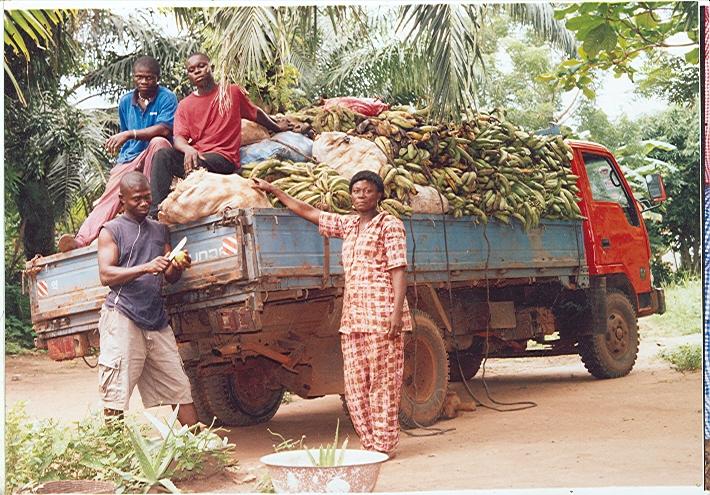
Sister Lydia is a trader who buys foodstuffs from farmers in the rural areas and transports them to the urban markets. She needs a loan of $850 to expand her business. She is a client of Kraban Support Foundation. She is also familiar with the TEACH Lending program. She will be able to manage the loan because she keeps her records very well.
$775.00
loaned so far
$75.00 still needed

Thursday, April 5, 2007

Myths and Facts about Africa


A presentation of my thoughs mixed with those of Jacob Crawford in his excerpt that can be found at http://crawfurd.dk/africa/


Most people frequently use the word Africa, not only for the continent,
but also as a common denominator for 50 countries, 720 million people and 1000
languages. We say "Africa" when we don't remember the names of the countries and
many people wrongfully believe there is a common language called "African". We
also use terms like "African culture", "African music" or "African
religion" even though there is no single culture, music or religion for all of
the countries/regions. A first step to understanding "Africa" is to acknowledge
that it consists of a huge number of religions, tribes and groups of people each
with a very different history.


I have noticed that most people who've neber been in Africa think its a huge country with all its citizens living in the same conditions, eating the same food, dancing at the same rythm,listening to the same music and speaking the same language. In Senegal alone, there are more than 10 spoken languages, ethnic groups, cultures.....


''Quite describing for our view on Africa and it is history, "Africa" is
not even an African word. The origin of the word is still a little uncertain,
but it is credible to see a connection from Latin (Africa = sunny) and Greek
(Aphrike = not cold). The Romans were the first to use the name. For them it
covered Tunisia and the most northern parts of Algeria and Libya. They could
also have been inspired to the name from some of the first people they met on
the continenent: The Afri, which were a berber tribe in the Carthage area. Egypt
was already known territory, but further South was unknown land. Around 2,000
years ago "Aethiopia" seems to have been used to describe the land found south
of Sahara, but Europeans later used "Africa" to describe the entire continent.
This is why we began to see Africa one land with only one kind of people.
Strangely enough it changed from the land of sunshine and warmth to "the dark
continent". The story is much more complex than that: a more fulfilling
explanation can be found in the excellent book "Wonders of the African World" by
Dr. Henry Louis Gates, Jr

It has always been comfortable and easy for Westerners to see Africa
as a whole. Africa used to be somewhere far away with dark skinned people,
having customs so different from our own: A land of fairytales or sometimes
horror. Today we are a bit wiser, but it still seems like an impossible task to
really understand the amounts and numbers we are dealing with in Africa... the
cultural diversities – and the social disparities.
The African continent is
so vast, varied and rich in every way. It is fantastic and completely
incomprehensible. Nothing compares to all this and yet we try to make it all fit
into a small word of 6 letters. It is almost an insult! It is Impossible! No
word can hold so much ...but in some way it does.
When used to generalise
and simplify the word can be harmful, but most people on the continent proudly
describes themselves as Africans. Sometimes the African identity is even
stronger than the actual nationality. Historically this could be due to the fact
that most nations and borders in Africa are a European-colonial invention.
Before colonialism there were around 10,000 kingdoms, but no countries called "Kenya", "Ghana", "South Africa" or "Ivory
Coast". Independence gave birth to the nations we know today, but also to a
pan-African feeling. Generalising again, I risk saying that Africans all over
the world calls each other "brothers and sisters". Obviously the colonial
exploitation had given the Africans some kind of a common history. But long
before any white man sat foot in Africa the tribes and people had already been
mixed together and switched homelands several times. Obviously there ARE
similarities between tribes and people in Africa.''


Even it it has been misused and people dont always know the meaning of the word 'Africa'. I love the word for everything it has to offer. I love the word Africa for every bit of history that has been written about it. I love the word Africa for the thousands and thousands of cultures it describes. I love the word Africa for the thousands and thousands of people who identity to it and call themselves African. I love the word Africa for every emotion that could be read and felt at its sound. Keep it Up Africa!!! We Love u

Wednesday, April 4, 2007

Making the G8 Accountable


UN
Integrated Regional Information Networks

April 4, 2007Posted to the web
April 4, 2007
Addis Ababa
Africa's economic growth is estimated to average
5.8 percent in 2007, but this rate of performance is insufficient to meet the
Millennium Development Goals (MDGs) by 2015, according to Léonce Ndikumana,
chief macroeconomic analyst at the trade division of the United Nations Economic
Commission for Africa (ECA).
"Countries will never be able to achieve the
MDGs if they are not creative," Ndikumana told reporters at the end of the
two-day Conference of African ministers of finance, planning and economic
development in Addis Ababa on Tuesday. "Business as usual just won't do."

For more Go To http://allafrica.com/stories/200704040456.html


Well let me tell u some: the G8 doesnt beleive it is acountable. Why? Reality check: what is the G8?A group of 8 of the world's richest countries . What does it do? It talks, supposedly to make plans and policy about trade, debt and aid.And yes, these 8 men at the G8 have the power to change the lives of 800 millions lives.These men have the power to make 'poverty history', to make poverty end. But do they care? that is the question.
Poor countries do not need free trade , they need trade justice. What the G8 does is force poor countries to liberalize their economies through conditions attached to aid and loans.They dont allow poor countries to protect their infant industries or their farmers . Did u know that the G8 system robs the developing world of an estimated $700 billion in lost earnings every year?(with free trade). This system helps the rich get richer and the poor get poorer. So how do u make the G8 accountable ? Make them care! But how can they care since there is limited membership on the G8 that excludes the needs and views of poor countries.The G8 focuses on its own economic needs, and pursues policies that will benefit G8 members. This is often done at the expense of other countries in the world.I can't see any of the G8 nations being prepared to sacrifice their own capitalist agendas to help in any real way.If making Africa strong and independant doesnt benefit the G8 nations, they will not allow it to happen.Also through the G8, member countries can make deals and compromises with one another and then form powerful alliances to exert influence on international institutions.Imagine that you are in an organization in which everyone is supposedly equal. However, a small group of people meets separately without you, decides how it is going to act, and is able to dominate the organization. Would you feel that the organization is credible?
What poor countries should do since they cant force the G8 to be accountable even though they must be acountable for these problems that they do create, is form their one G8, how about a P8( the poor countries version )It's only Africa that will develop Africa. Africa's slow growth in the last three decades coincided with the heavy flow of aid. Free aid has had zero effect on the continent and it doesn't take rocket science to realise that zero plus zero never gives a positive.There's an old saying that goes something like "give a man a fish and you feed him for a day, but teach him to fish and you feed him for life." Lets take care of our own economies, thats our only way of salvation


Monday, April 2, 2007

Discover Dakar I ( places and monuments)

The Central Bank of West African Countries ( The Siege) . This is located in the downtown area next to hotels and restaurants


The Central Bank of African Countries( The Offices)


The 'Garde-Rouge'( Red Guards) of the White House. They always have a straight posture when they're not marching in front of the White House.


The Anse-Bernard Beach, the only beach that is located in downtown Dakar next to the Millenium Door


The Millenium Door. This was constructed in 2000 on the Corniche of Dakar. It has a door in its middle thats known as the Millenieum door . This door symbolizes the entry to a new century or millenium. At the top of the door there is a statue of a woman named Yaye Boye= Mother in wolof. She symbolizes mother Africa watching over its children.


The IFAN Museum dedicated to African traditions and cultures.

The White House


An aerial view of Dakar


Another picture of Dakar driving.


This is Place Soweto in souvenir of the fight of black people in Soweto, South Africa. It is located in downtown Dakar.


Independance Place: This is one of the most famous avenues in Dakar. It is where Senegal got its independance on April 4th 1960

African Queen, I salute you


There is a woman living in Dakar named Yassin
Her heart very pure, is unknown to sins
She is the one I truly admire for her courage
Coz she's stronger than a thousand men her age
Her inner strength, her motivations keep her daily alive
Alone, with her own means, she taught herself how to survive...

There is a woman living in Bamako named Awa
She is more immaculate than a virgin flower
I don’t know what keeps her going every day
Stones and rocks are all she finds on her way
I don’t think that I know what she's made of
But one day, she will walk across the sea like a dove...

There is a woman living in Darfur named Fatima
She doest know how to wear a bra
She has lost all her sons in a war she doesn't understand
She labors sorrow, pain and tears in her unfertile land
For this life, she doesn't deserve, but she didn’t choose
She's waiting for the good Lord to pay her her dues...

Yassin, you are my true African queen
Awa, you are my true African queen
Fatima, you are my true African queen...


You are me and I am you
Life has been harsh on you
But I carry your pain in my soul
And in my heart, there is a hole...

Coz some day, one day, you will die being a hero
But in the book of life, your page will be a zero
No monuments, no schools will be built in your honor
Because your last name is not O'Connor
No prize or medal will be given to you
You'll be forgotten like a bee in a zoo...

And it hurts like a bullet on my chest
And it hurts like a bird killed in a nest
In my heart, you have a monument
In my soul, your life is an achievement...

When I grow up, I wanna be just like you
In the forest, I will be the strongest bamboo
African Queen, with my pen n these words, I honor you
You are my hero and with this poem I salute you...

African Universities link up to offer regional PhDs


African universities are collaborating to develop degree programmes that will accelerate agricultural research and biotechnology development in Eastern and Southern Africa.

The announcement was made at a conference on biotechnology, breeding and seed systems in Maputo, Mozambique, this week (27 March).

The Regional Universities Forum for Capacity Building in Agriculture (RUFORUM), made up of 12 Eastern and Southern Africa universities, has developed doctoral programmes in dairy science, food science, plant breeding and biotechnology, research methodology and rural development, and crop improvement.

Adipala Ekwamu, RUFORUM's regional coordinator, says the degrees will be developed jointly by the universities and will involve roving tutors and web tutorials.

"These are regional PhDs," Ekwamu told SciDev.Net. "We are running these programmes to equip our scientists and fill the gaps that are being left by those fleeing for greener pastures."

After graduation, students will be given jobs in research institutions in the region to boost research capacity.

Universities involved include, among others, the University of Zambia, Malawi University, Makerere University, Africa University and the University of Zimbabwe.

Each programme will cost RUFORUM US$800,000. The programmes are sponsored by the Forum for Agricultural Research in Africa (FARA) under its Sub-Saharan Africa Challenge Program and its Strengthening Capacity for Agricultural Research and Development in Africa.

FARA secretary general Monty Jones said Africa needs to train more scientists in agricultural research to make significant progress in scientific research.

"So many younger African scientists are coming up and they need further training in order for them to make progress," said Jones.

The training will be modelled on course-based systems in the United States, with mandatory publication in a peer-reviewed journal. The programmes will start in August this year.

The project is not part of the plans for networks of centres of excellence developed under the New Partnership for Africa's Development, but RUFORUM has the same objective of using collective action to build science and technology capacity to speed Africa's development.

At the end of the Maputo conference, scientists said more human resources were needed in agricultural science.

They also called for African systems of research and innovation to create better crop varieties that will improve food security.

Officially closing the conference, Gary Toenniessen, director of the Rockefeller Foundation, said it is only through human resource development that Africa is going to realise its dream of a green revolution.

"We should always emphasise the importance of training and human resource development in order to realise our goals," he said.

Allafrica.com Feed